NEWTON GOETHE GALILEO
Rom, 2026
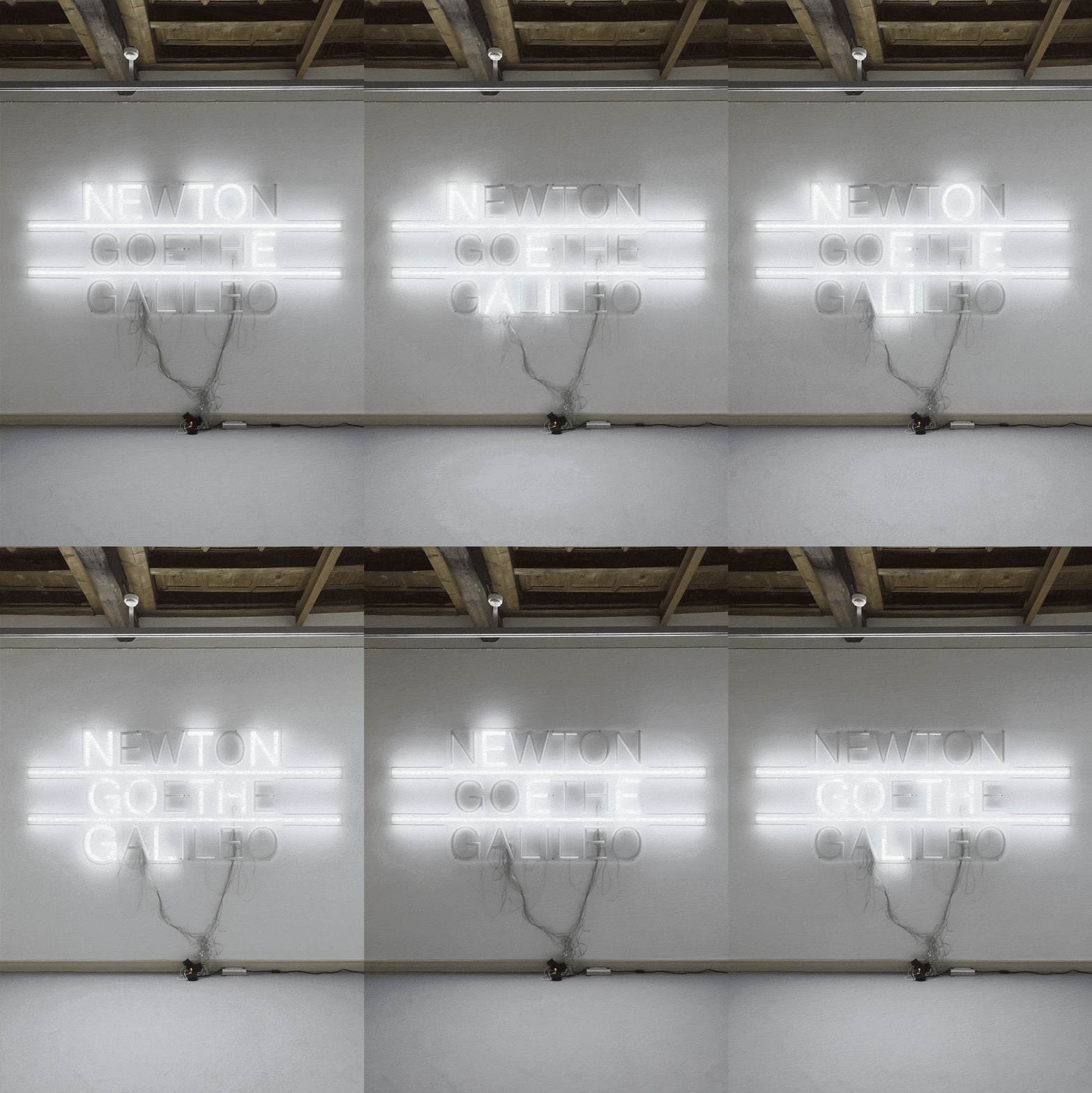
From Galileo to Contemporary Media Philosophy: Light as an Epistemic Structure
The history of color and light research is far more than just a chapter in the natural sciences. It forms a central axis of the history of European thought, where physics, the theory of perception, art, and philosophy intertwine. Light is not only the subject of scientific inquiry but also a medium of visibility itself—a condition for the possibility of knowledge.
Since the early 17th century, three figures have marked decisive turning points in this development: Galileo Galilei, Isaac Newton, and Johann Wolfgang von Goethe. Their works define three distinct epistemic models of light: instrumental vision, the mathematical ontology of the spectrum, and the phenomenological theory of color.
In contemporary philosophy, these models can be productively expanded. For Michel Foucault, light appears as part of historical orders of knowledge; for Peter Sloterdijk, as an atmospheric condition of human living spaces; for Bruno Latour, as an effect of experimental networks; for Gaston Bachelard, as a poetic element; and finally, for Vilém Flusser, as the foundation of technical visual worlds.
The history of the theory of light thus becomes, at the same time, the history of vision, of the media, and of the cultural production of reality.
On Galileo: Instrumental Vision and the Birth of Visual Science
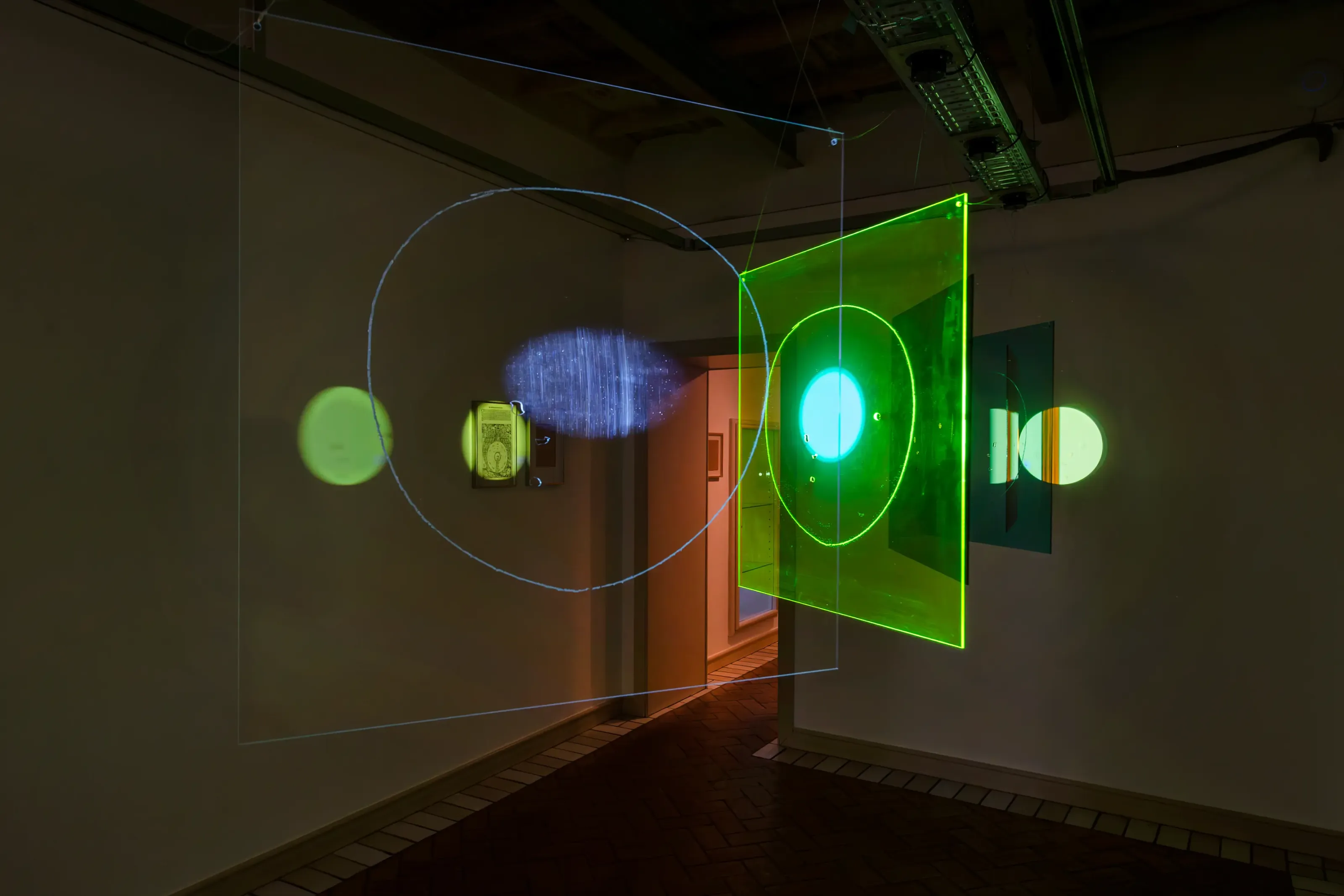
Galileo Galilei marked the beginning of a fundamental transformation in the role of vision in the pursuit of knowledge. The use of the telescope in astronomical observations gave rise to a new epistemological situation: truth is now produced by a technically enhanced eye.
Observing the Moon’s surface, Jupiter’s moons, or sunspots leads to a radical reordering of the cosmological worldview. But even more important is the methodological implication: knowledge arises from the interplay between instrument, observer, and representation.
The art historian Horst Bredekamp has described this practice as a form of iconic knowledge. Galileo’s drawings are not mere illustrations, but operative images—they are part of the experiment itself.
From Michel Foucault’s perspective, this moment can be interpreted as a transformation of the episteme of the early modern period. Visibility becomes the locus of truth. Scientific knowledge now emerges within a dispositif that connects instruments, images, and discourses.
Modern science thus begins not only with new theories, but with a new organization of seeing.
On Newton: The Mathematical Ontology of Light
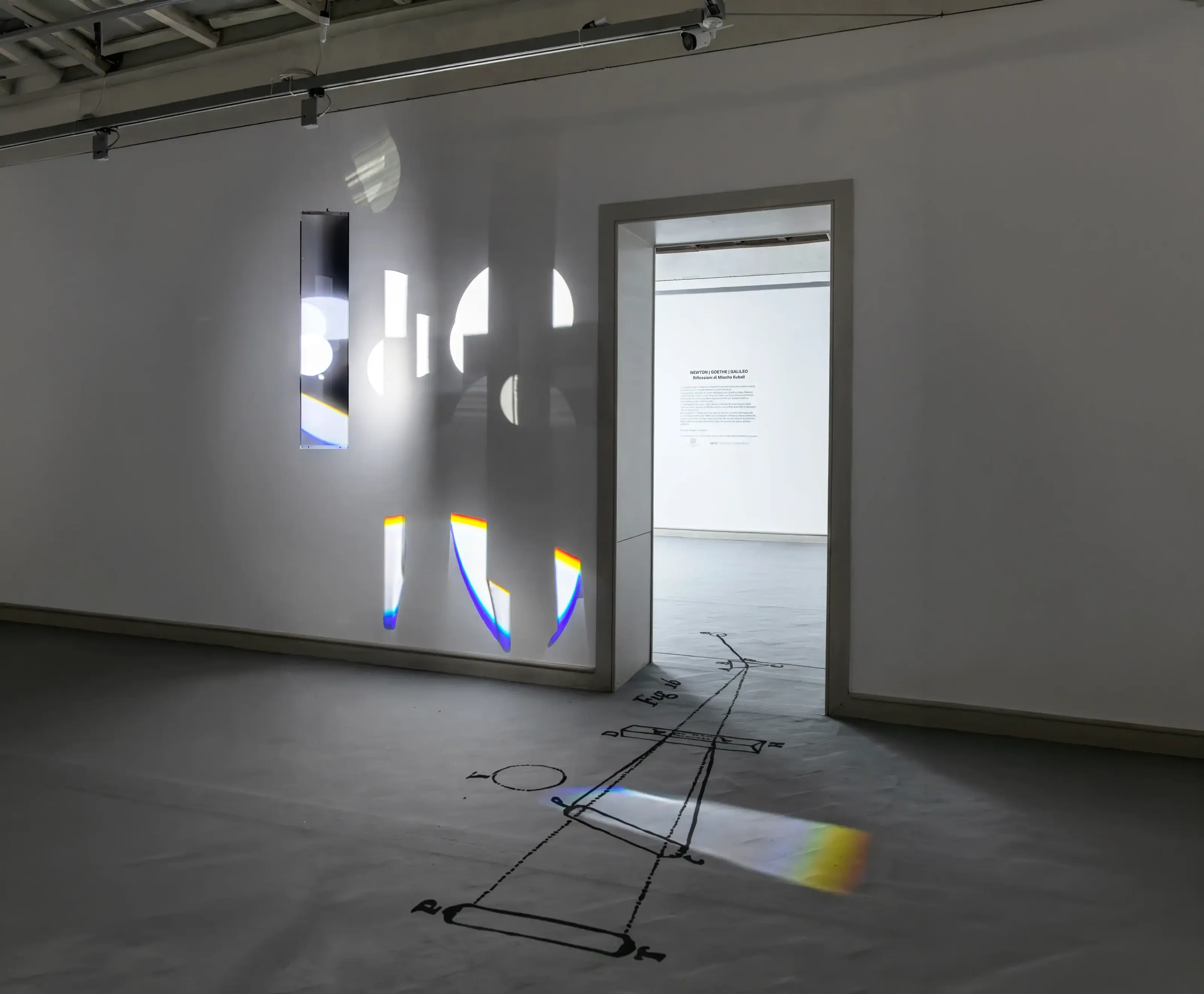
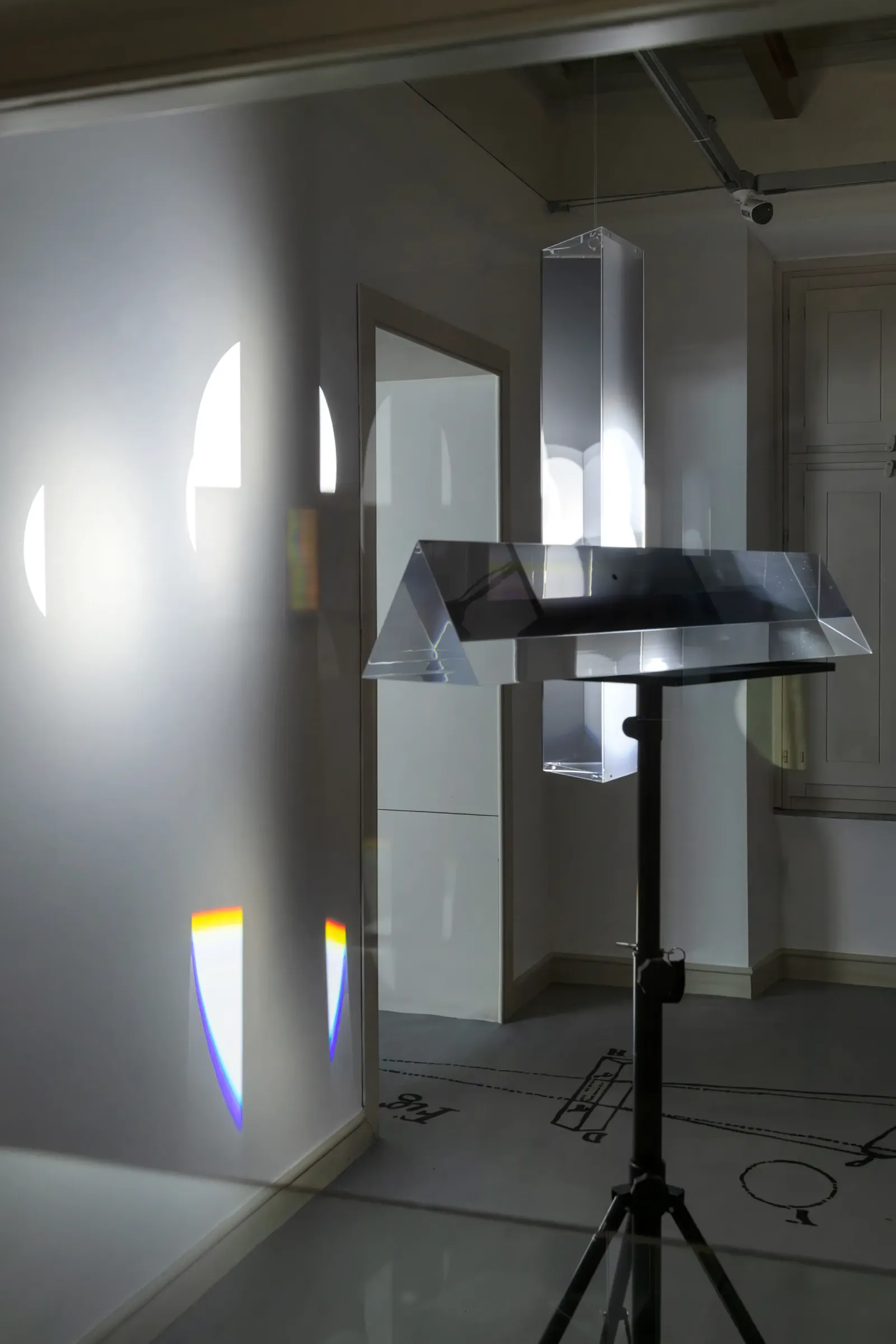
With Isaac Newton, the study of light underwent a radical formalization. His famous prism experiments demonstrated that white light consists of a spectrum of different colors, each distinguished by its own refractive index.
The epistemological implications of this discovery are profound: color becomes an objective property of light itself.
Newton thus established a model of scientific knowledge based on three principles:
• experimental control
• mathematical description
• Reducing complex phenomena to elementary processes
In Foucault’s analysis, this corresponds to the epistemic order of the Classical period, in which natural phenomena appear as structured systems of classifiable elements.
The prism functions here as an epistemic instrument: it makes an invisible structure visible. The spectrum becomes a visual taxonomy of light.
On Goethe: The Phenomenology of Color
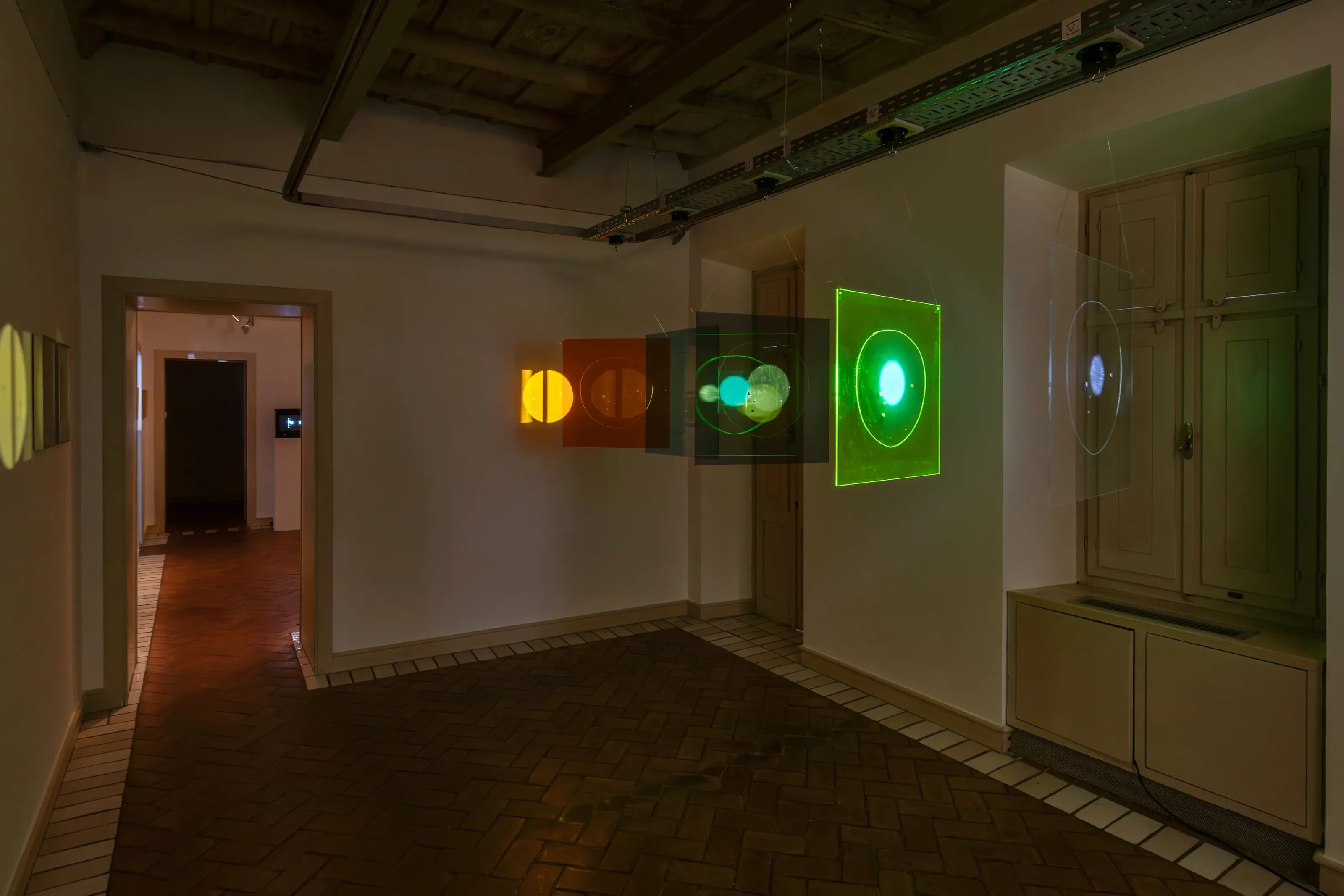
The most significant alternative to Newton's theory comes from Johann Wolfgang von Goethe. In his Theory of Colors, Goethe criticizes the reduction of color to physical rays.
For Goethe, color arises at the boundary between light and darkness and through the interplay of:
• Eyes
• Medium
• Surroundings
• Light source
Colors are therefore phenomena of perception. They do not exist independently of the process of perception.
This position can be understood as an early phenomenological theory of vision. While Newton analyzes the structure of light, Goethe examines the structure of perception.
The difference between the two approaches is therefore less a scientific dispute than a conflict between two epistemological perspectives: objectivism versus phenomenology.
With Foucault: The Order of the Visible
Michel Foucault’s philosophy allows us to interpret these different models as historical formations of knowledge.
For Foucault, knowledge never exists independently of the structures of visibility in which it is produced. Light thus becomes an element of epistemic dispositifs.
Galileo’s telescope, Newton’s prism, and Goethe’s observations of color phenomena can be understood as different technologies of visibility.
Each of these technologies generates its own order of knowledge.
With Sloterdijk: Atmospheres of Light
Peter Sloterdijk’s philosophy offers another perspective. In his Spheres trilogy, Sloterdijk describes humans as beings who live in artificially created atmospheres.
Light plays a central role in these atmospheres.
Architecture, urban planning, and media create artificial interiors in which light structures perception. Modern societies can therefore be described as complex light environments.
From this perspective, classical theories of light appear in a new context:
• Galileo's telescope expands the cosmic scope of our perception.
• Newton's spectrum analyzes the physical structure of this medium.
• Goethe's Theory of Colors describes the atmospheric experience of light.
Peter Sloterdijk's concept of atmosphere thus brings together physics, perception, and space.
With Latour: Networks of Experimentation
Bruno Latour’s sociology of science also offers an important extension. From Latour’s perspective, scientific truth does not arise solely from experiments, but from networks of actors, instruments, and discourses. Galileo’s telescope, Newton’s prism, and Goethe’s observational practices are thus part of such networks. Here, light appears as an effect of experimental configurations.
With Bachelard: The Poetics of Light
While Latour emphasizes the experimental nature of science, Gaston Bachelard focuses on the imaginative dimensions of the philosophy of nature. For Bachelard, elements such as light, fire, and water possess a poetic structure. Scientific knowledge is therefore always linked to symbolic images.
The history of light research is thus not only a history of experiments, but also a history of metaphors.
With Flusser: Technical Images and Light Media
With Vilém Flusser’s philosophy of media, this development finally reaches the present day. For Flusser, technical images—photography, film, or digital displays—emerge from complex devices that transform light into information. Modern visual culture is therefore based on the technical control of light. This brings us full circle:
The light that Galileo observed through the telescope becomes a programmable medium in digital culture.
Light: Between Physics, Perception, and Media
The history of color and light research shows that light has multiple dimensions at the same time:
• physical structure
• phenomenological phenomenon of perception
• cultural medium
• architectural atmosphere
• technological infrastructure
From Galileo to Newton and Goethe, and on to Foucault, Sloterdijk, Latour, Bachelard, and Flusser, a complex epistemology of light thus unfolds. From this perspective, light appears not only as an object of scientific inquiry, but as a fundamental medium of culture—a medium that structures perception, knowledge, and space in equal measure.
This multidimensionality is particularly evident in contemporary art—especially in light and media art. Here, light is no longer merely depicted; rather, it becomes a material in its own right within artistic practice.