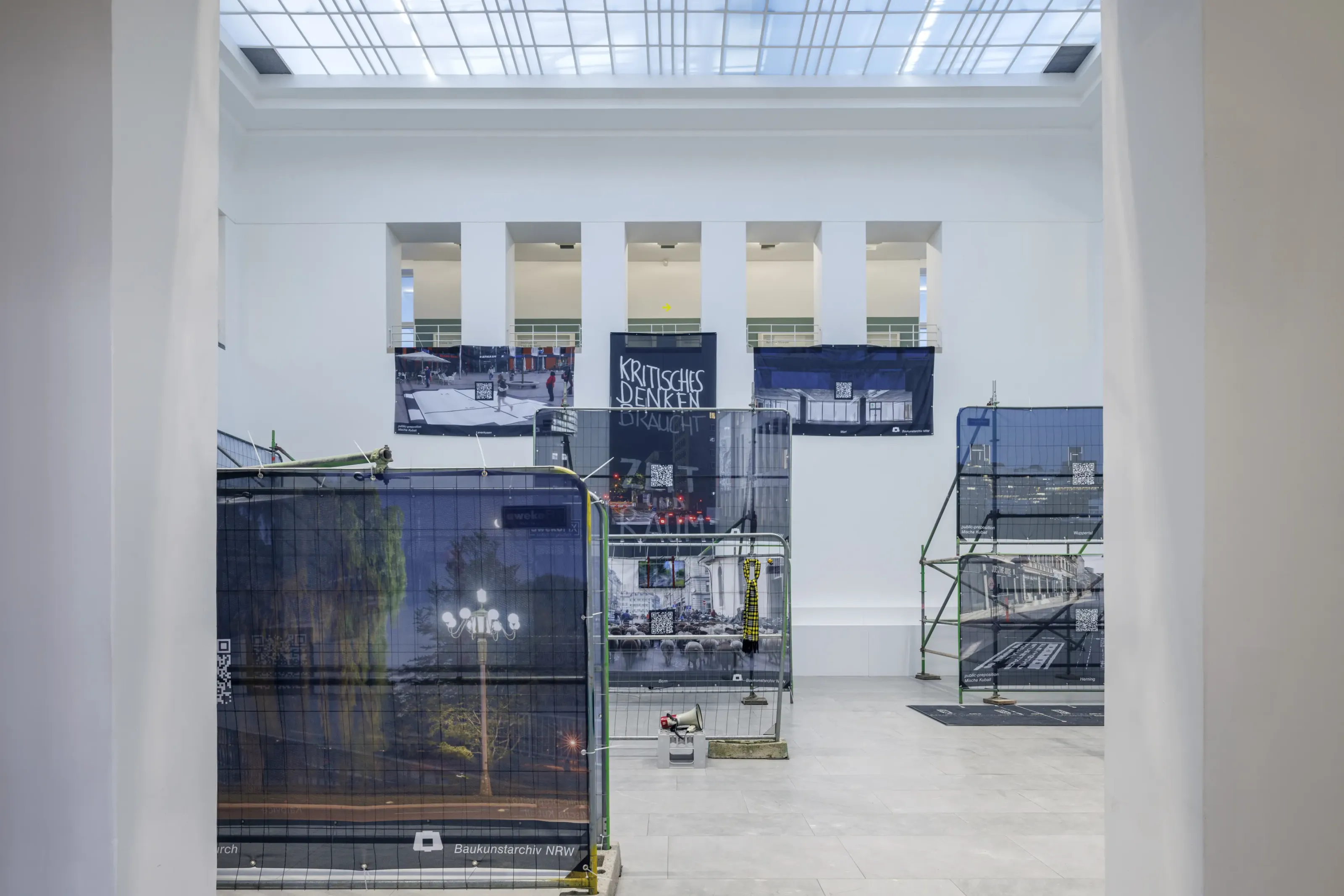
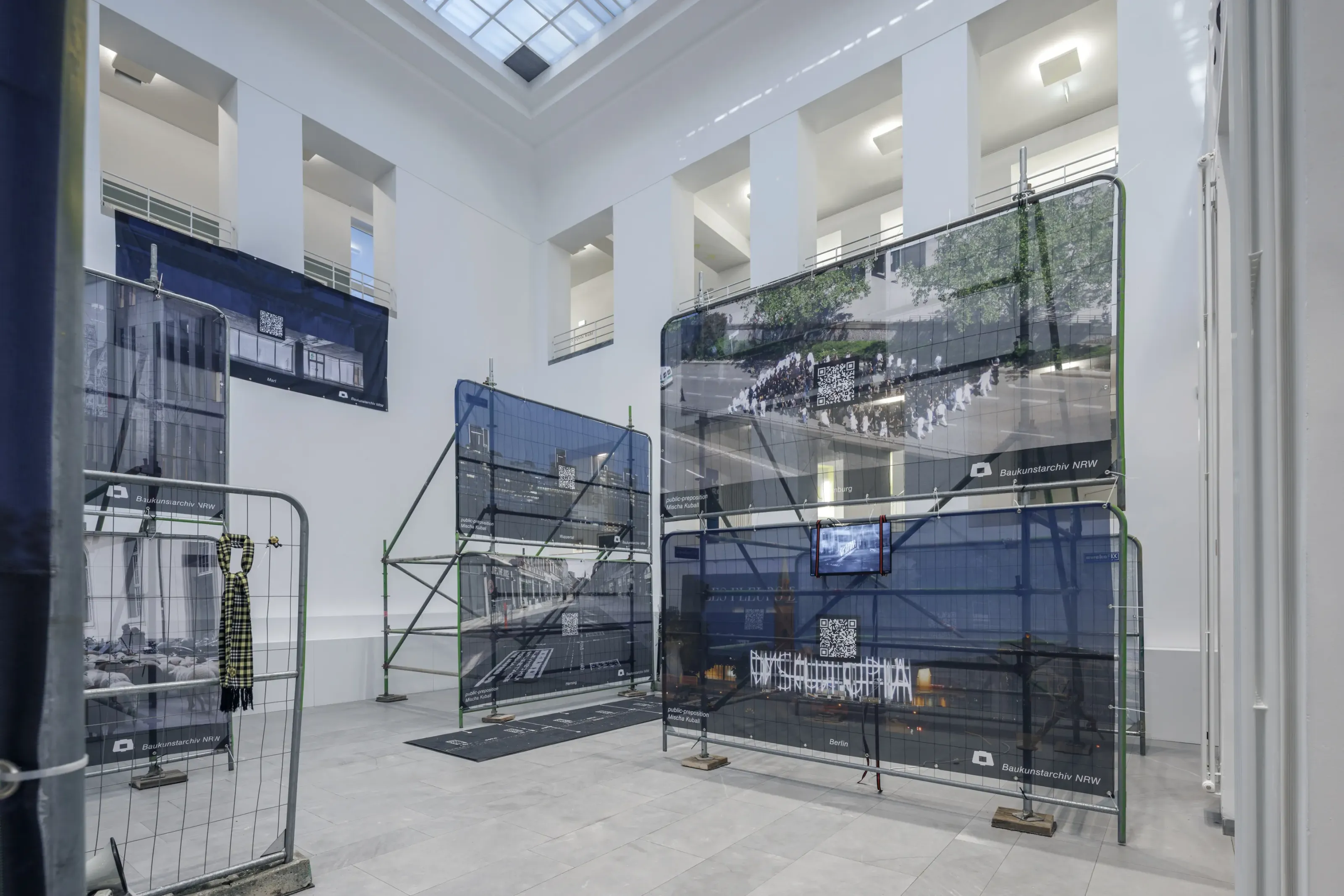
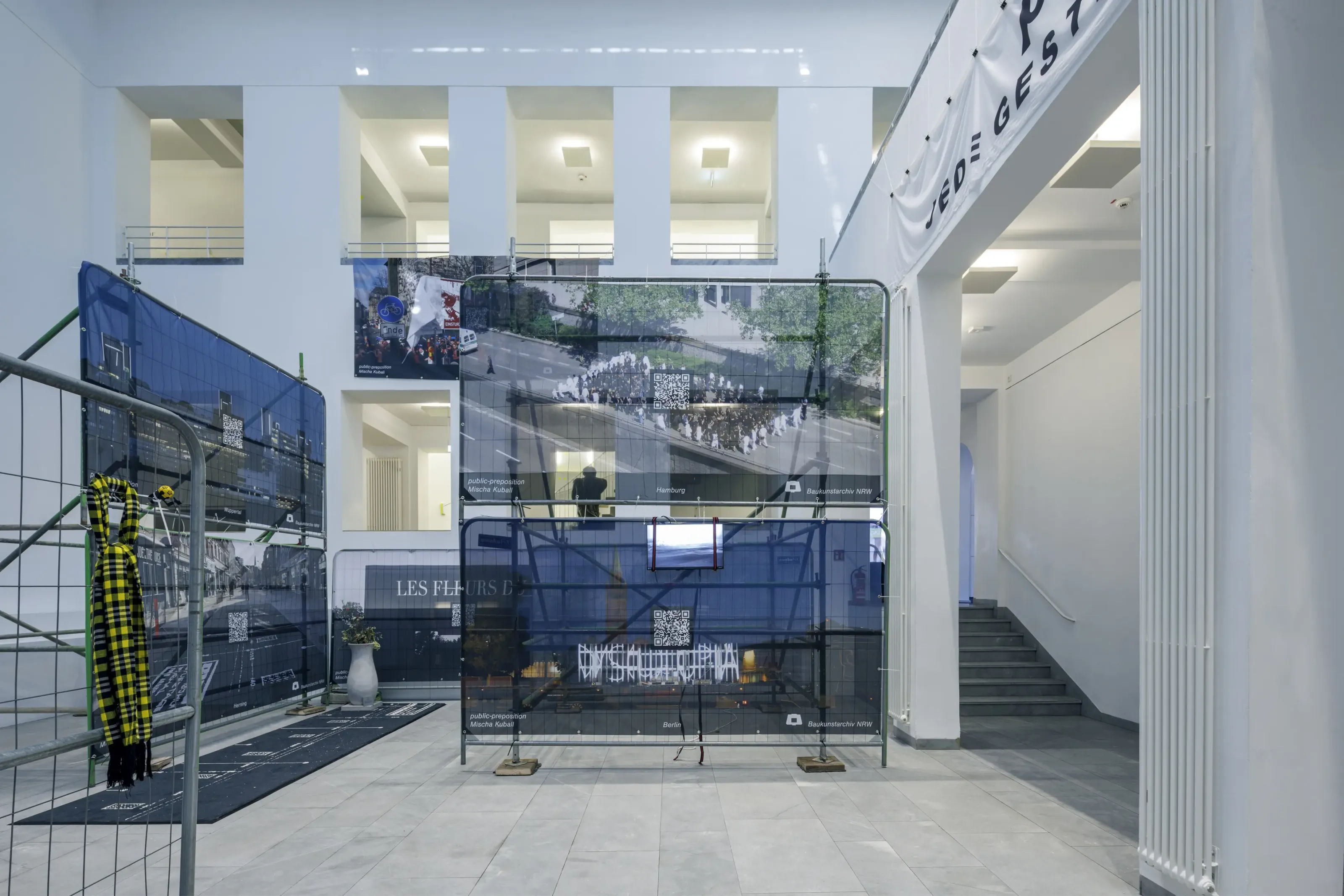
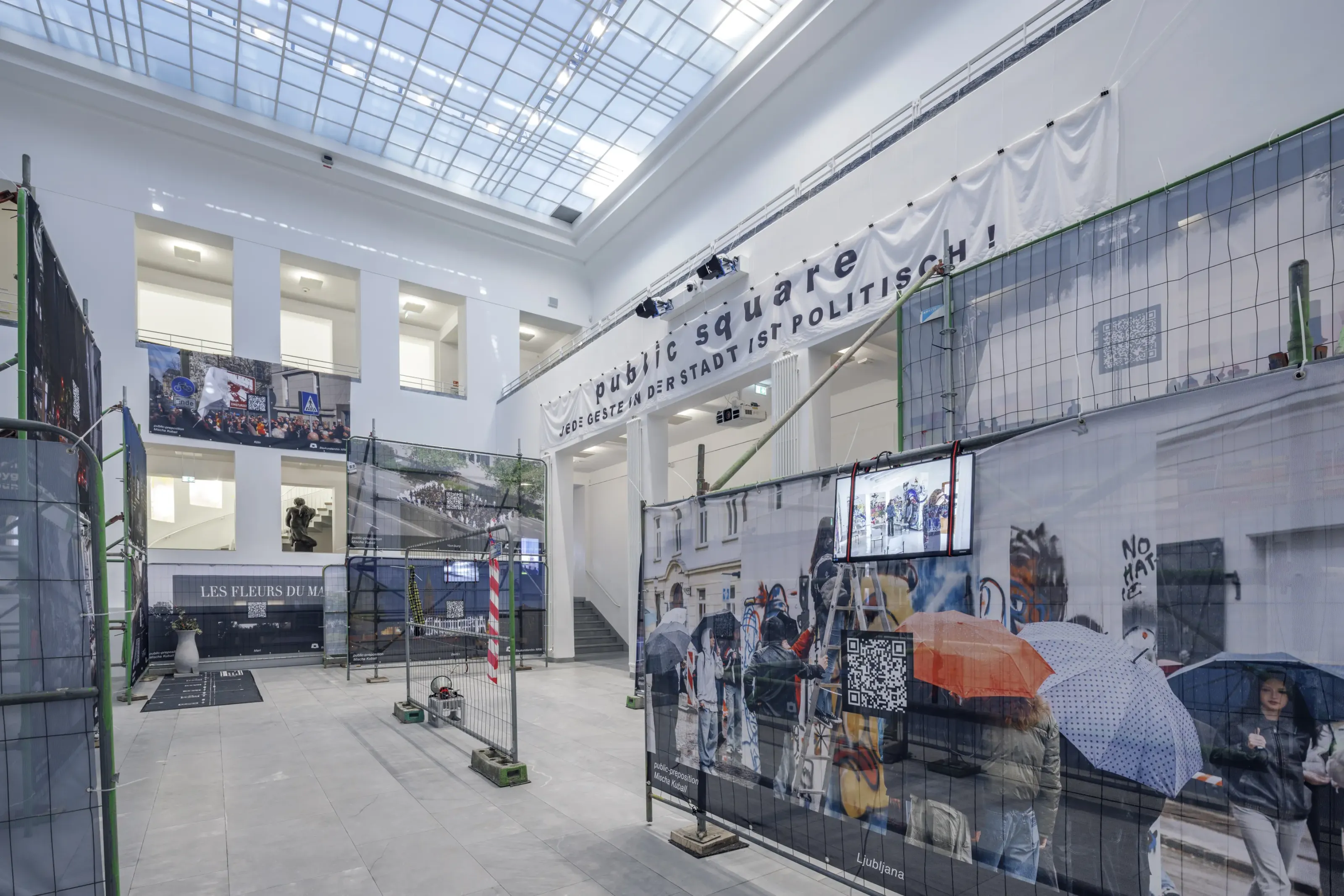
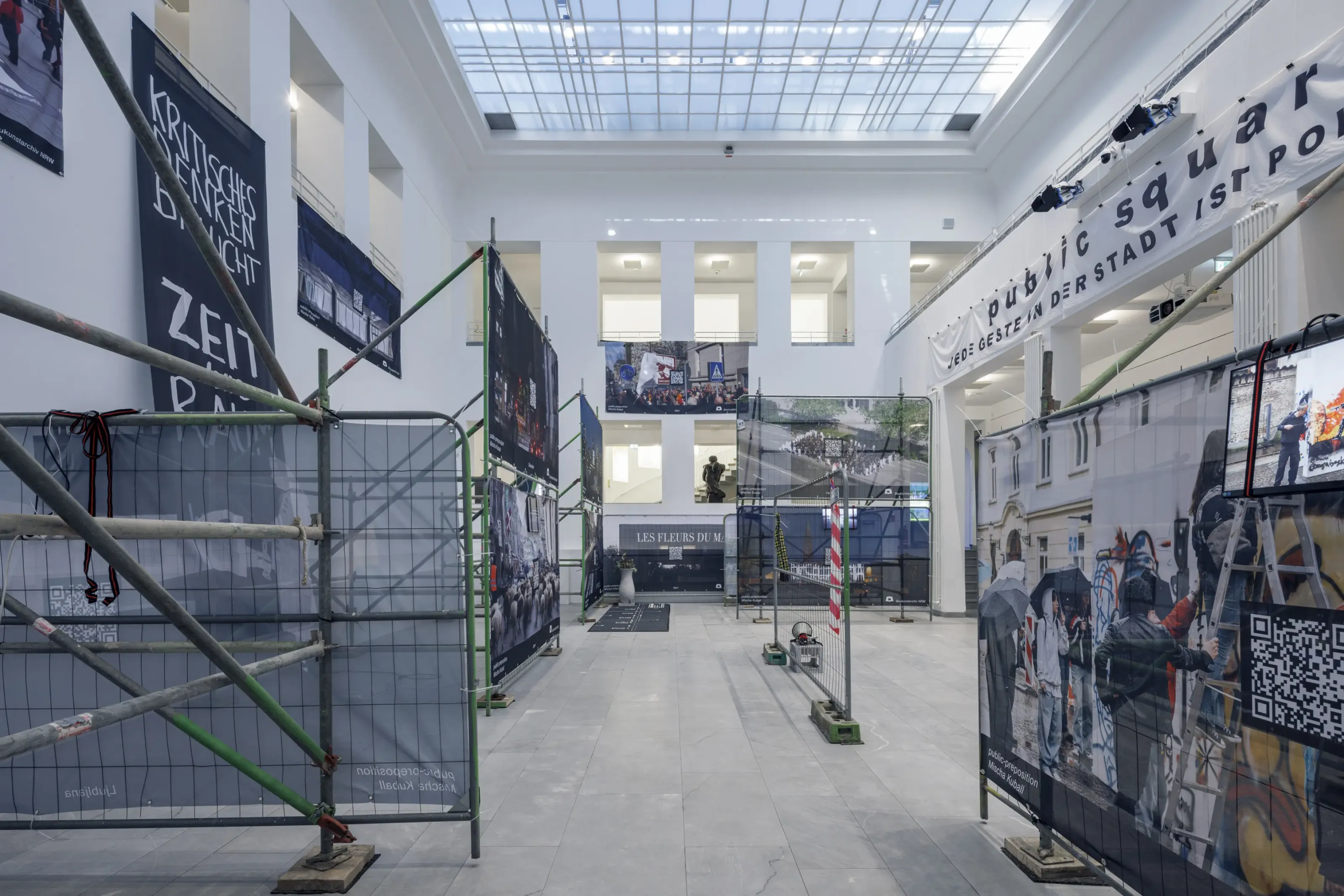
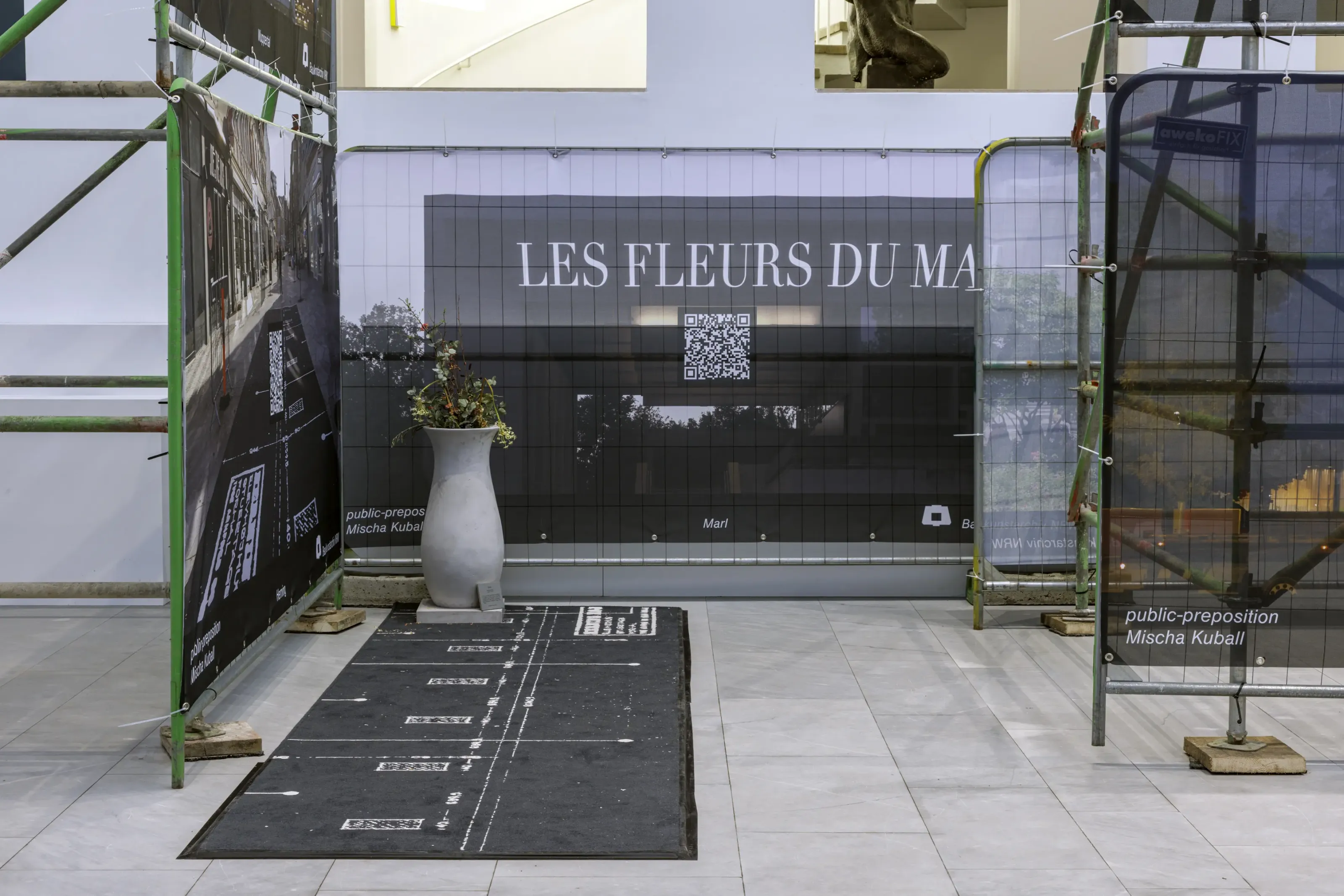
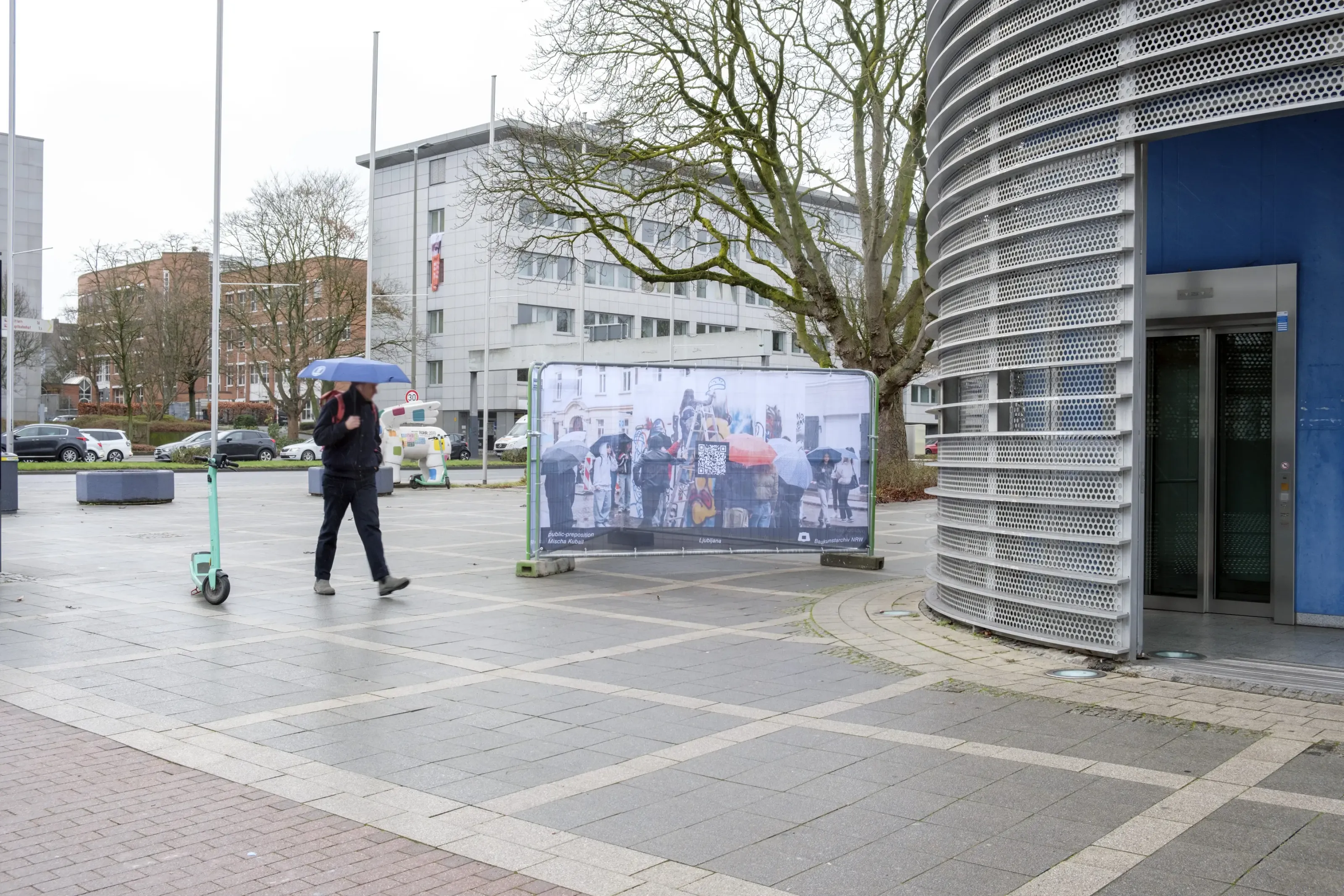
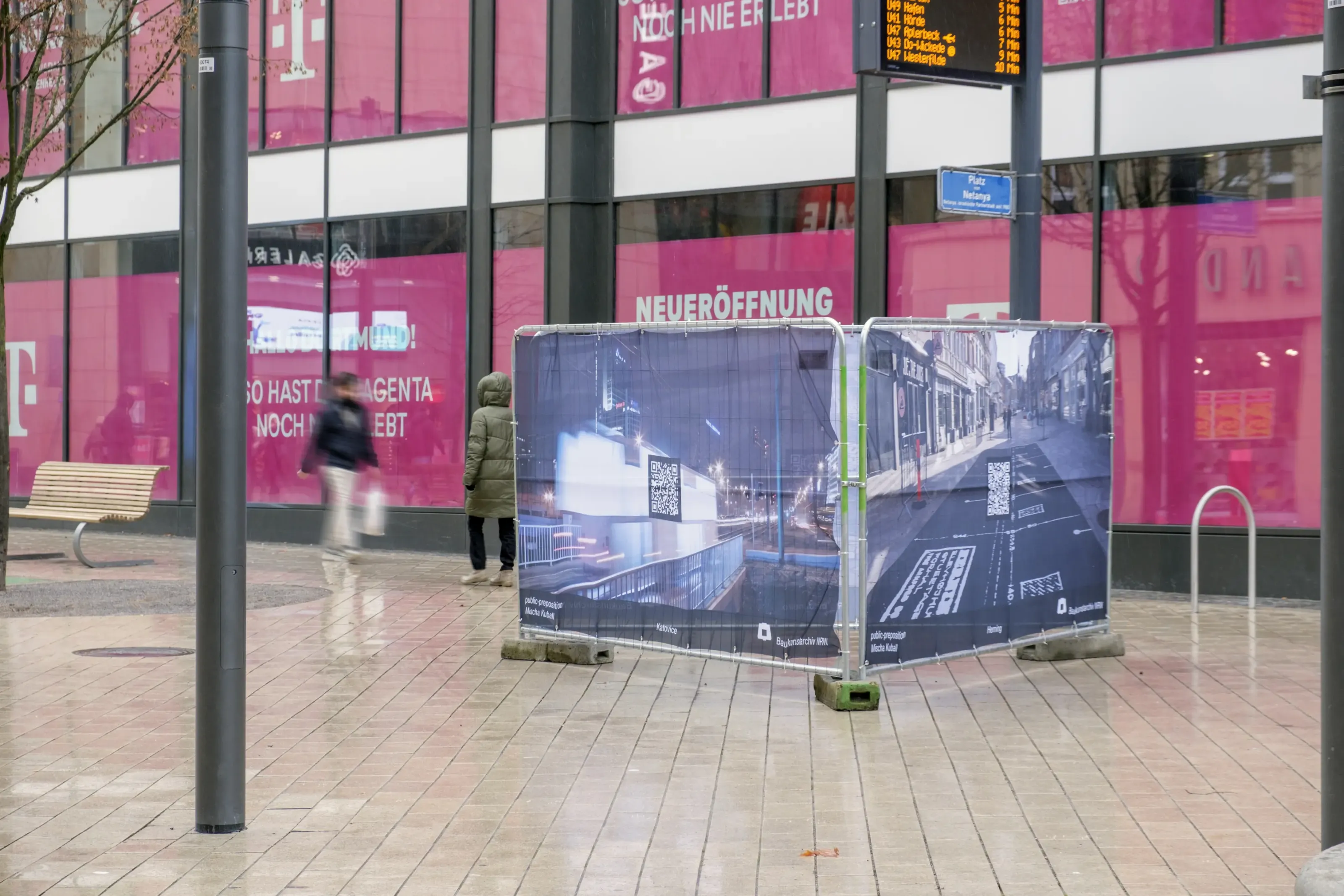
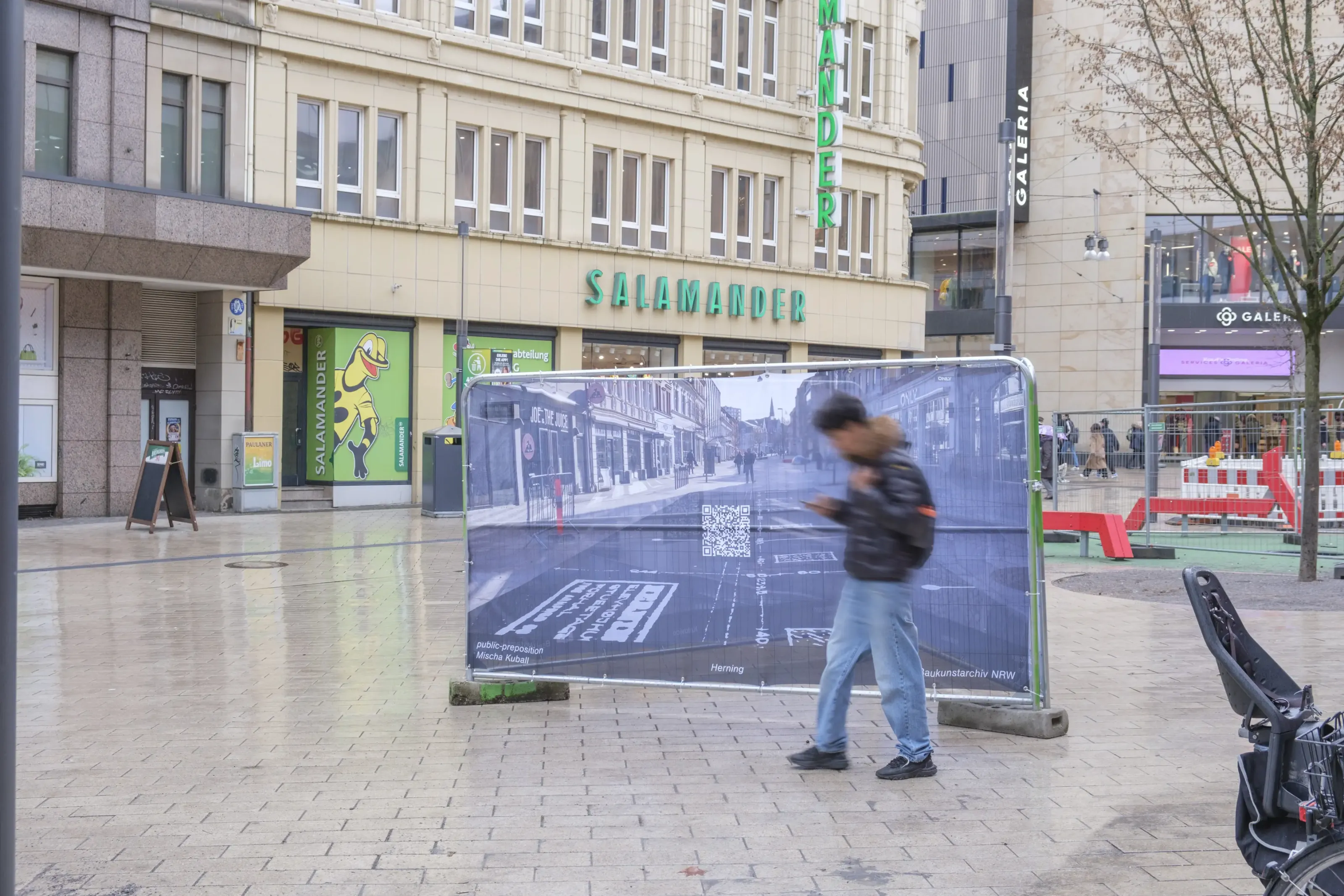
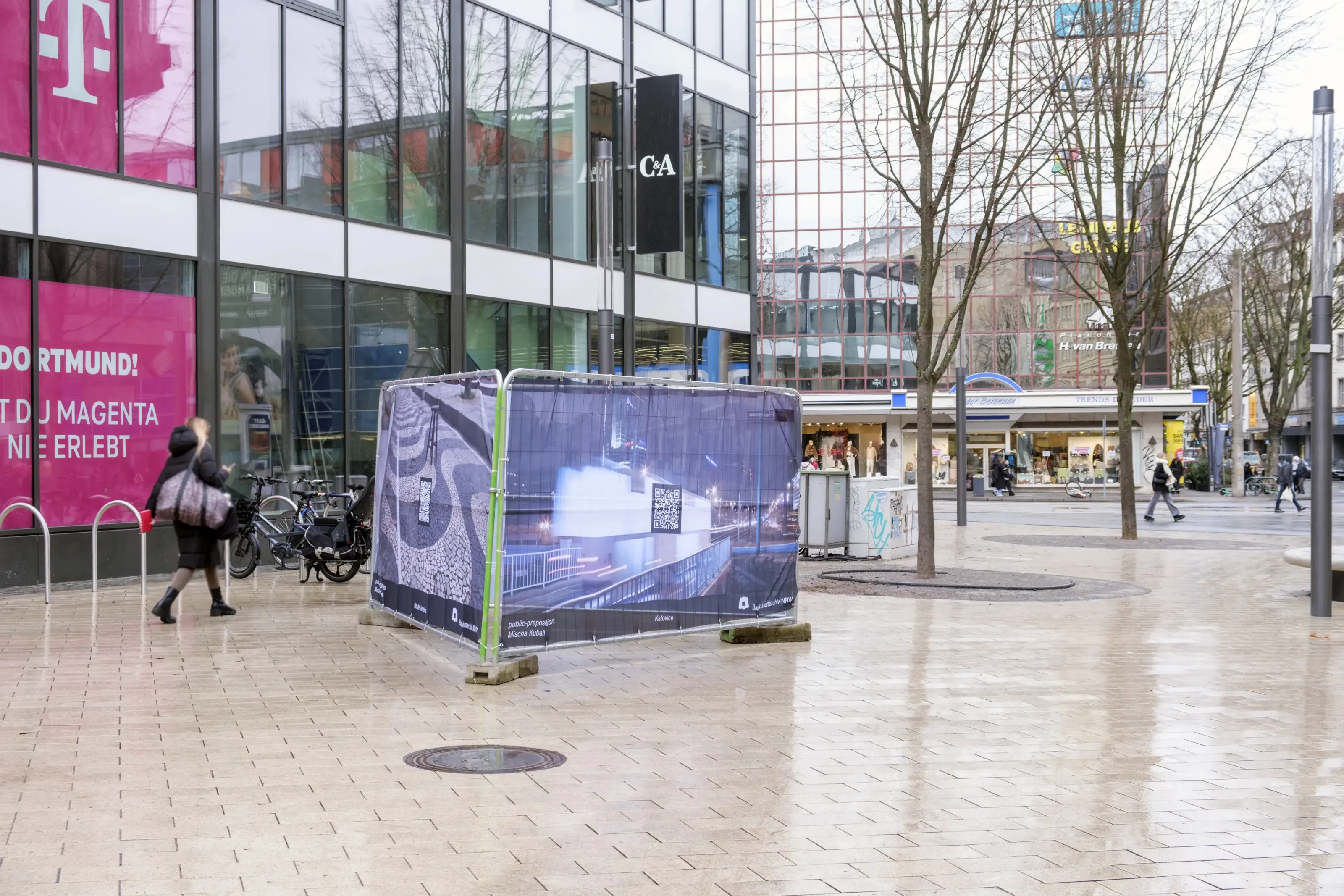
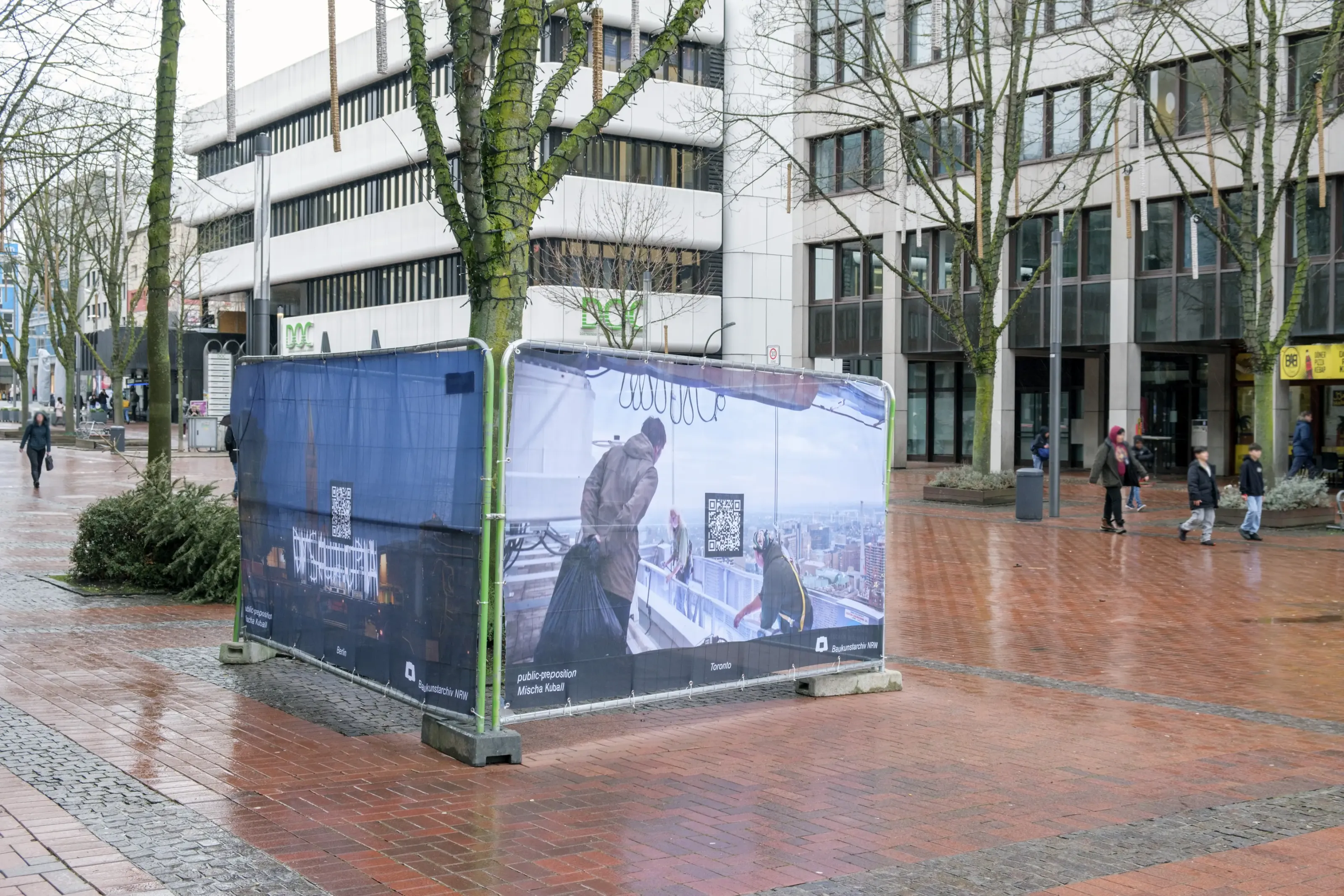
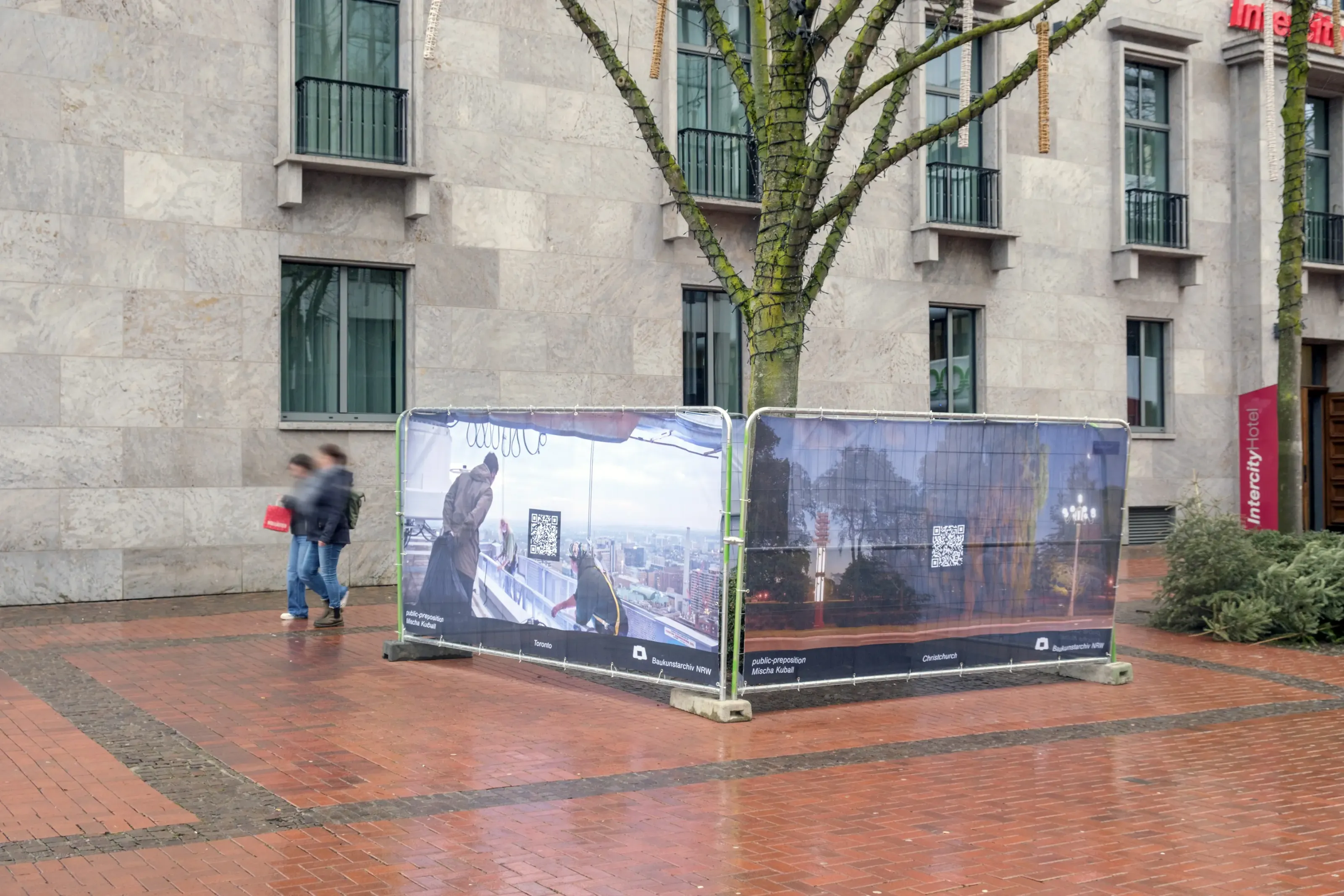
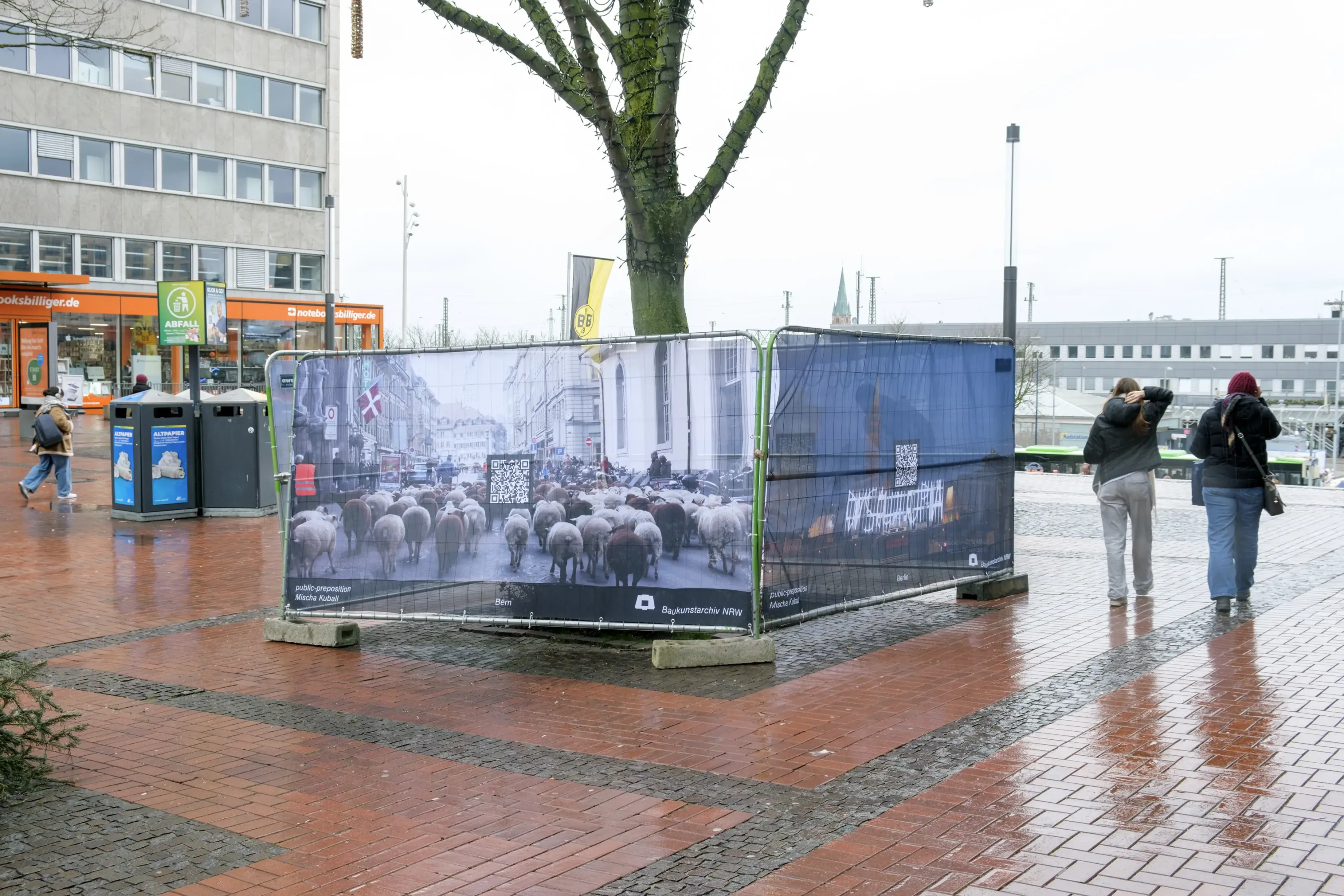
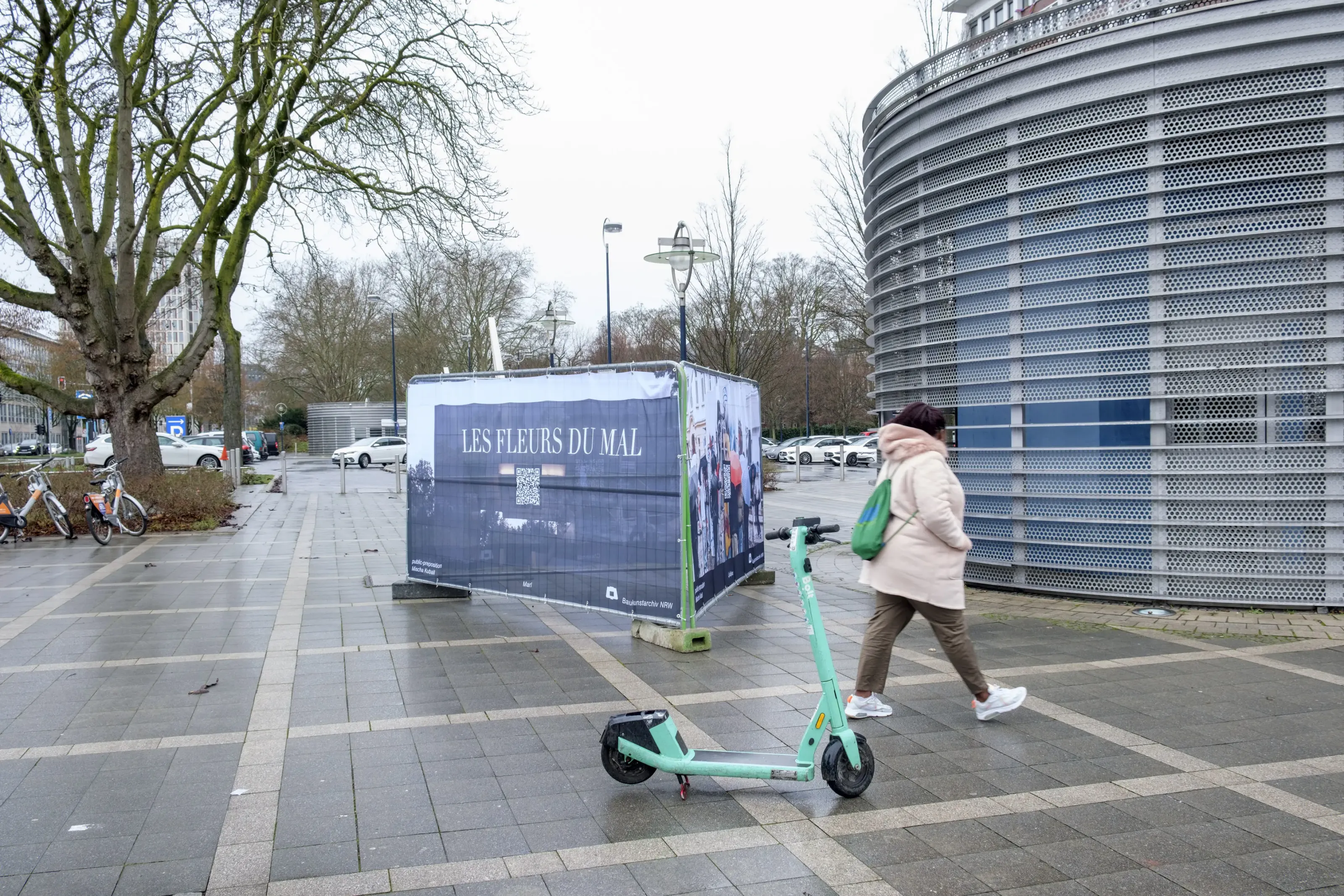
on construction / public preposition
Dortmund, 2026
It begins with the idea of collage: the principle of montage, of bringing things together without claiming any historical linearity. Instead of a clear line, a web emerges—a rhizome-like network of possible, sometimes seemingly random connections. This way of thinking opens up spaces: it makes the public sphere public.
In 1748, the Italian cartographer Giovanni Battista Nolli developed a revolutionary plan for the city of Rome that not only showed all built-up areas and streets, but also all the interiors of churches, palaces, and institutions that met the criterion of being temporarily accessible spaces.
The principle of the public sphere is linked to the principle of openness in the sense of open access.
Today’s urban spaces are (post-)public spaces where various functions intermingle. Regardless of the space, however, the concept of the public sphere also has a “performative” component, since the term generally refers to events that attract the attention of an audience—which implies that a key prerequisite for the constitution of the public sphere is the potential audience’s ability to actually participate in an event. This, in turn, means that the decisive factor in characterizing an event as public is less the protagonists of the event and more the audience.
We—the spectators, listeners, mediators, and commentators—are the ones who characterize and shape an event, and thus also a work of art, as public.
These considerations can serve as a starting point for understanding where we stand when we discuss our relationship to urban spaces. And regarding who the city belongs to—here as well, for example in Dortmund.
- MK